
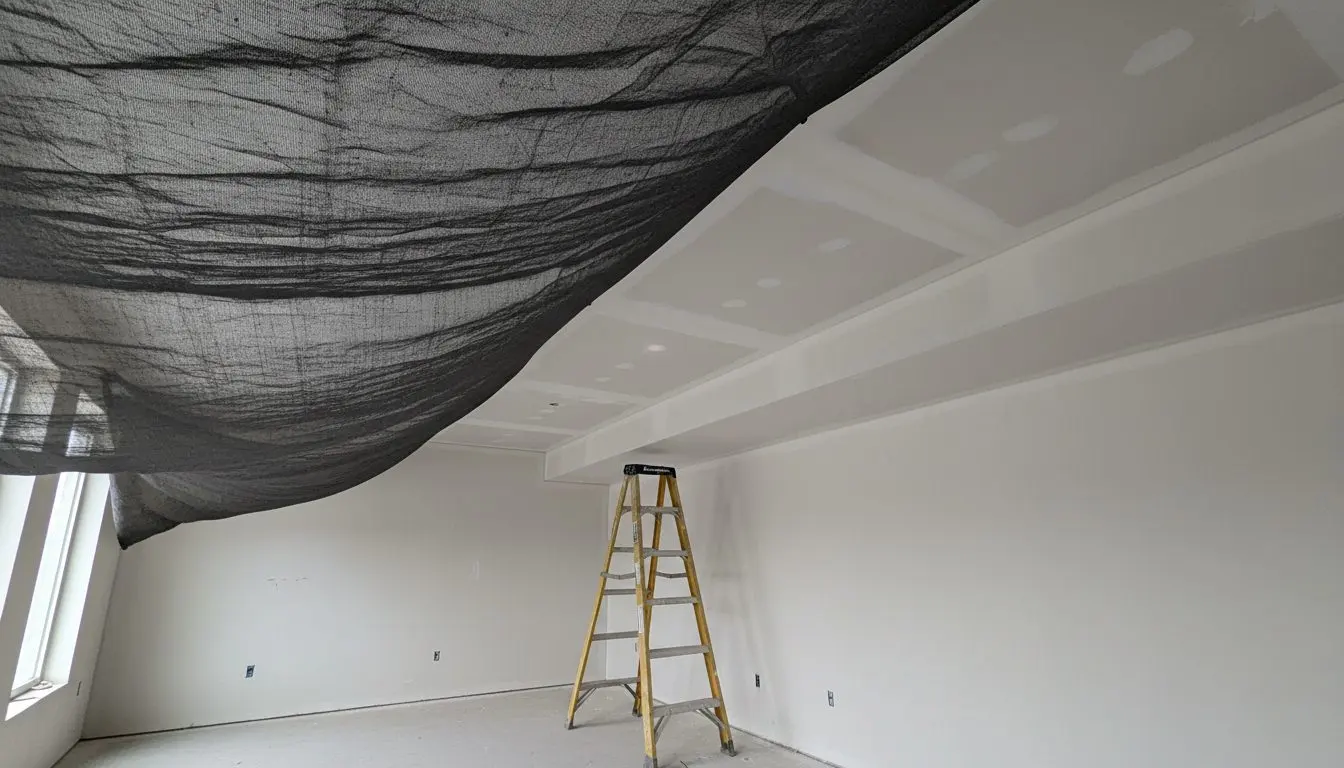
Ceilings in Fargo
Ceilings and Soffits in Fargo, Horace and West Fargo
Five-eighths board run across the joists, a screw into every joist at twelve inches, and the insulation put back to full depth before a sheet goes up.
Ceilings that still read flat after a valley winter
You end up with a ceiling that holds one flat plane across the whole room, with no line where the sheets meet.
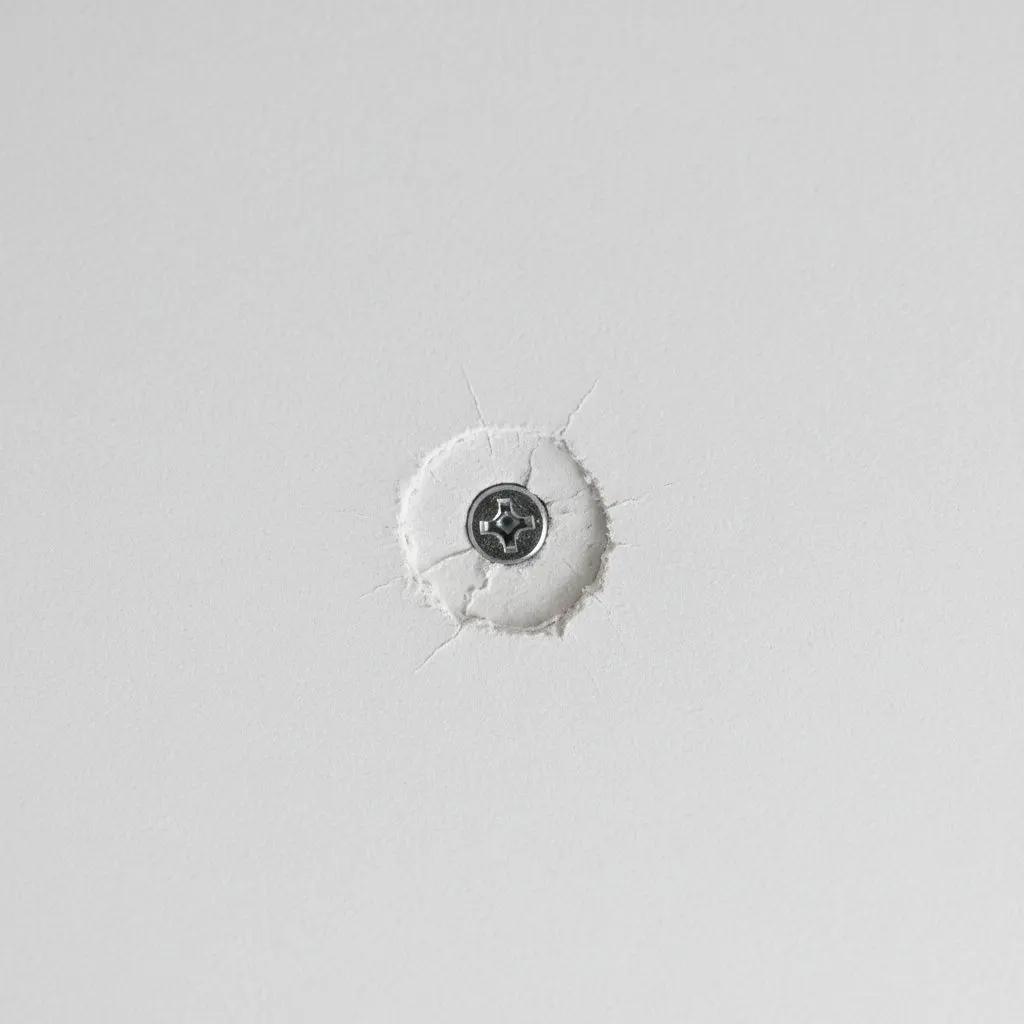
Ceilings is everything overhead. New ceiling board, bellied or cracked ceilings taken down and replaced, soffits and bulkheads boxed around ducting, and ceilings opened so another trade can reach something. The pattern that goes on afterwards is texture and finishing. A ceiling that is stained or soft starts at water damage repair.
Around forty-five ceilings a year, and roughly two thirds of them are replacements in houses built before 1980 rather than board going up in new work.
Bellied ceilings coming down and going back is the most common call, then new ceilings in additions and finished basements, then bulkheads boxed around ducting, then ceilings opened for a plumber and hung back. Board goes up in five-eighths, run across the joists, with a screw into every joist at twelve inches and the sheet ends landed on blocking. Half-inch board on framing at twenty-four inch centers is what puts a belly between the joists once a heating season has dried the house out.
Somebody in Hawthorne who has watched a ceiling drop between the joists since Christmas, and a builder in Horace wanting ceilings hung ahead of the walls on two houses at once.
Call for a free ceiling check at (701) 555-0132. You will go from glancing up at that sag and looking away again to never once thinking about the ceiling!
New ceilings, bellied ones, soffits and bulkheads
Everything above your head in one scope, from stripping the old ceiling out to a primed surface.
- Ceilings hung in additions and basements
- Bellied ceilings taken down and replaced
- Soffits and bulkheads boxed around ducting
- Ceilings opened for a plumber or electrician
- Strapping and shimming joists into a plane
- Blocking for fans, lights and attic hatches
- Taped, sanded and primed overhead
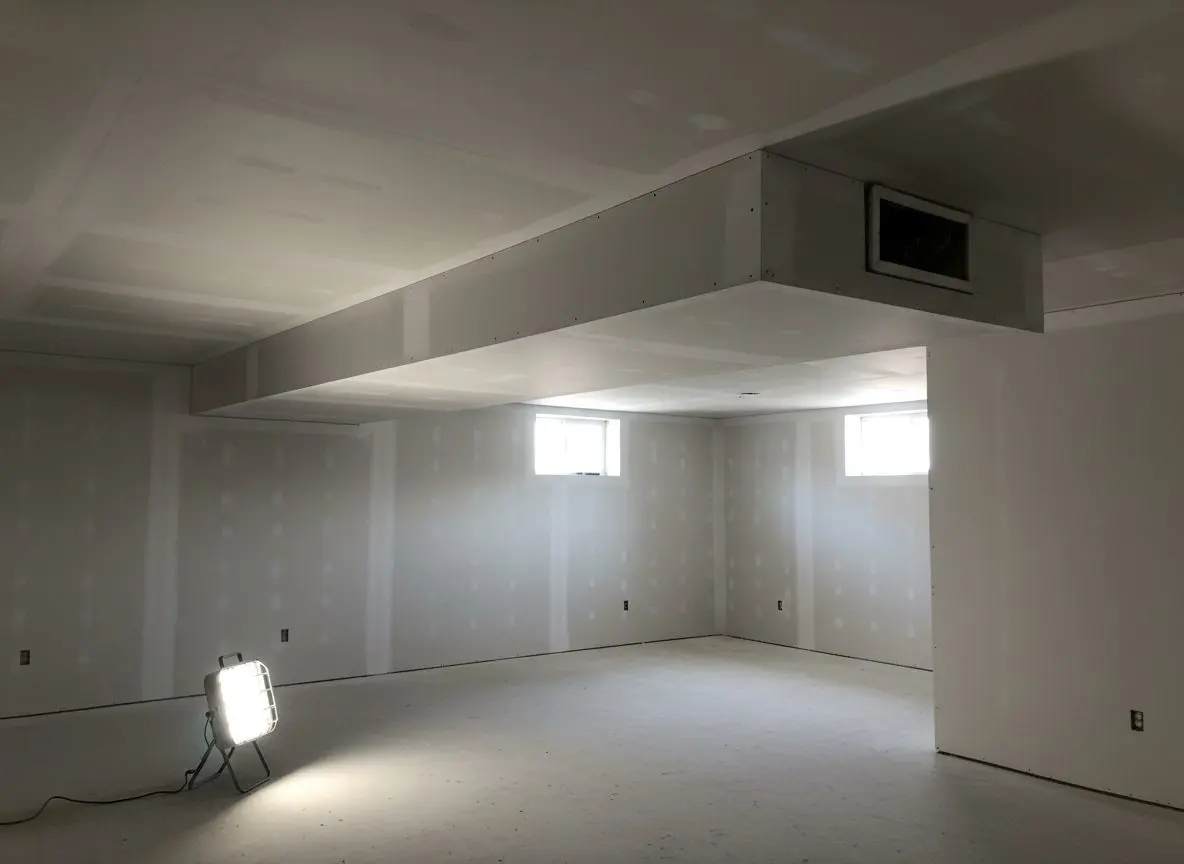
Refixing a ceiling that has dropped, or taking it down
A dropped ceiling is usually a fixing problem rather than a board problem, and the fix is a day.
Refix when the board is dry and firm, the sag runs to a fixing pattern rather than to the whole span, and nothing above it is wet. The ceiling is screwed back to the joists with longer screws beside the old ones, the joints re-taped where they have opened, and the whole surface skimmed and sanded flat.
Take it down when the board is soft, when it is half-inch on joists at twenty-four inch centers, when the sag runs the full span, or when the insulation above it has to be replaced anyway. Screwing a bellied sheet back up flattens it for a season and puts the same crack back through the joint the following spring.
You will be told which of the two it is on the visit, standing under it with a screw gun and a straightedge, including the times it is a morning of refixing rather than two days of tear-out. A ceiling that only needs screws and a skim gets exactly that written on the scope.
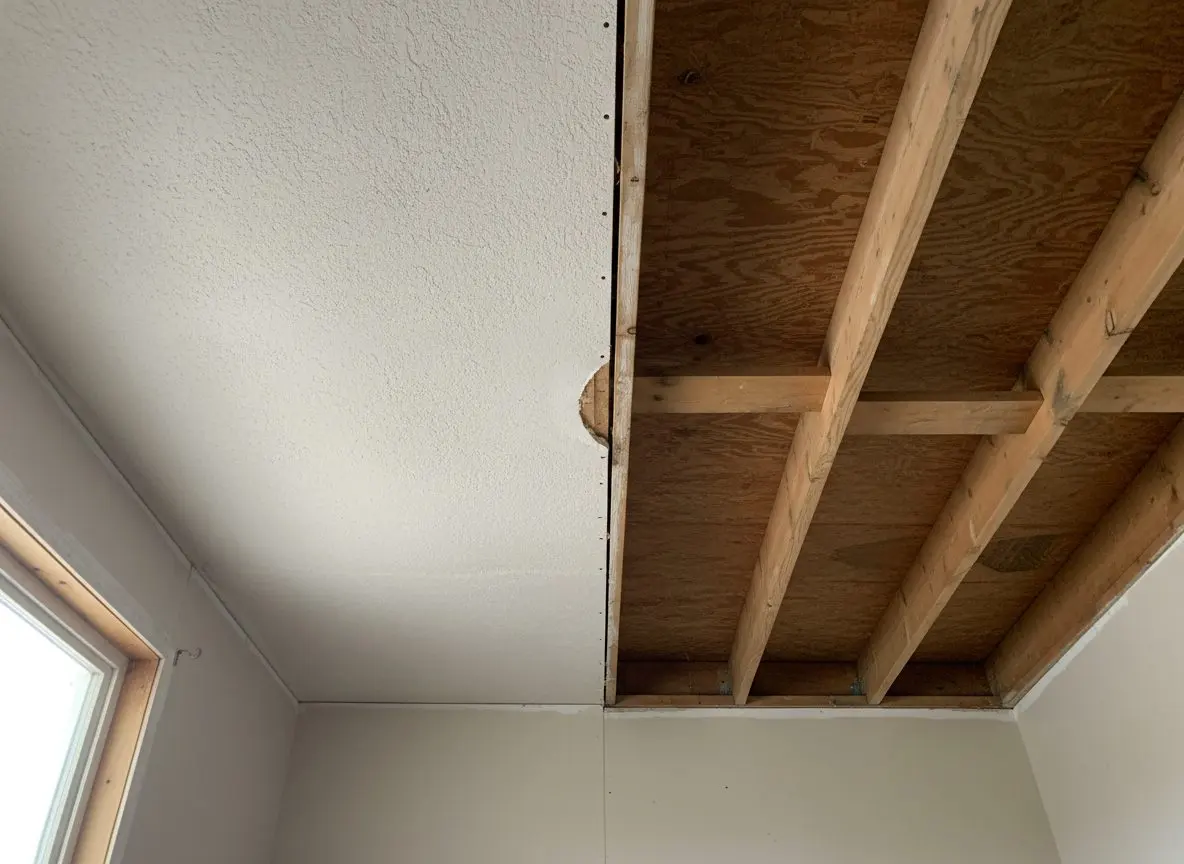
What stops a ceiling bellying between the joists
Five-eighths overhead, a screw into every joist at twelve inches, joists strapped into a plane first.
Ceilings take five-eighths board, run across the joists so the tapered edges cross them and every joint sits in a recess. Screws go in at twelve inches into every joist with the gun set to depth, and the sheet ends land on blocking rather than floating between joists.
Where the joists are out of plane, or sit at twenty-four inch centers, strapping goes on across them at sixteen inches and every high one is shimmed down before a sheet is lifted.
The vapor barrier is lapped and taped at the top plate rather than cut off at it, because a break there is where warm indoor air gets into the attic and comes back as frost. Insulation goes back to full depth and is never packed down over the board.
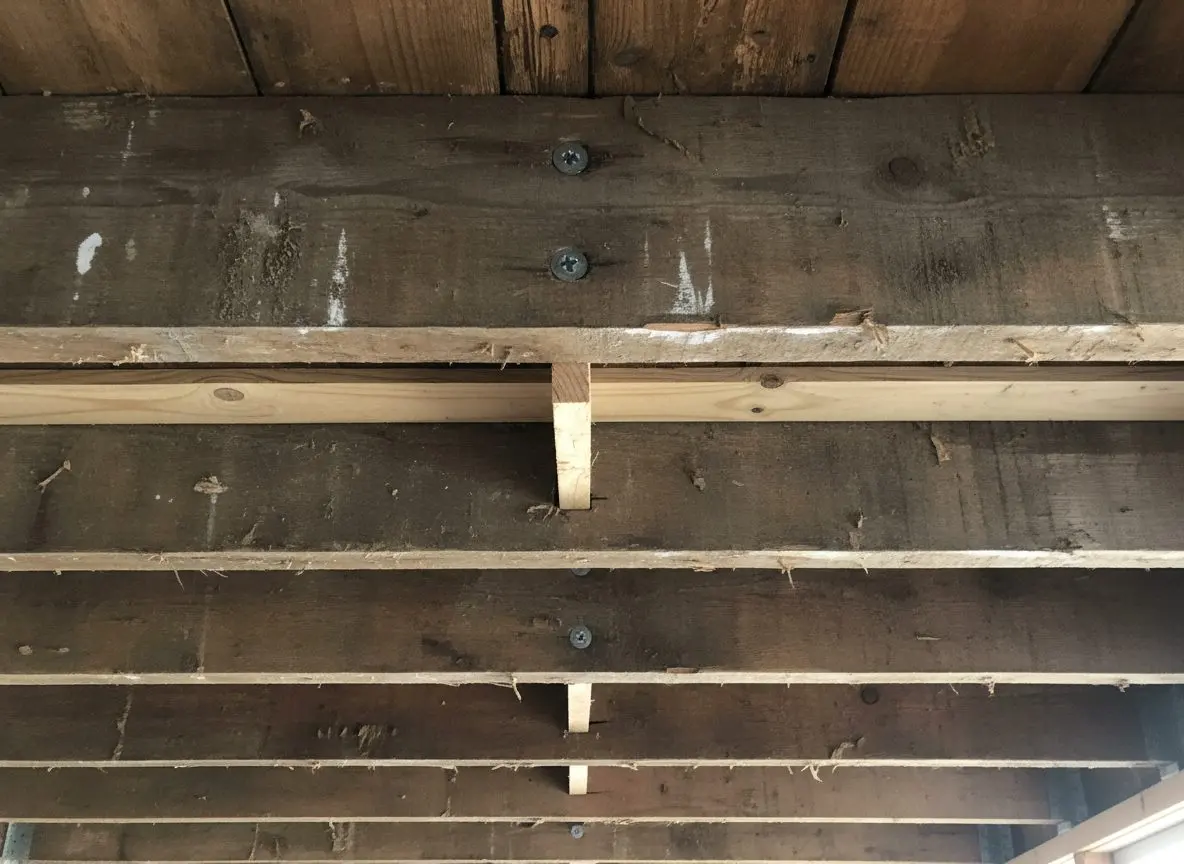
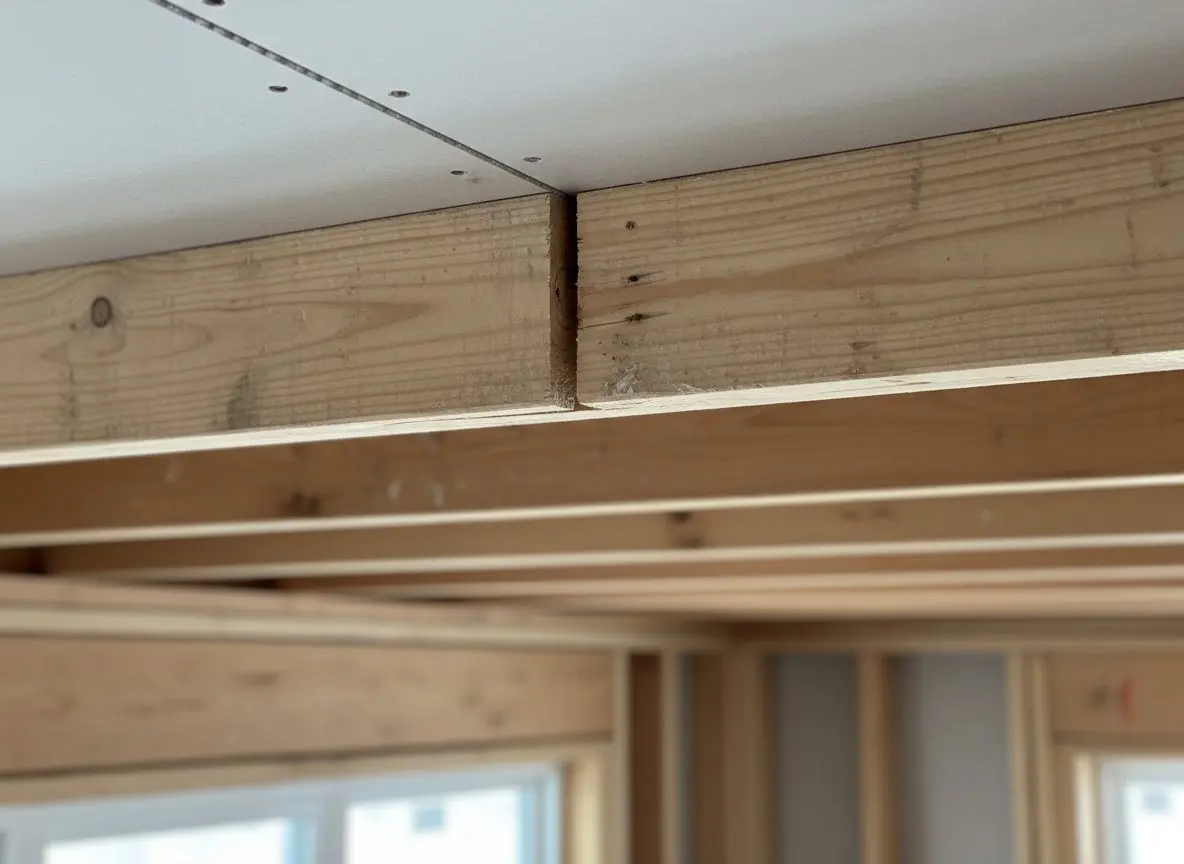
- Five-eighths board on every ceiling
- Sheets run across the joists
- A screw into every joist at 12 inches
- Sheet ends landed on blocking
- Strapping at 16 inches where joists are out of plane
- Vapor barrier lapped and taped at the top plate
Call and somebody will come out, measure the room and tell you which of these your job actually needs.
(701) 555-0132What moves the price of a ceiling job
Two ceilings of the same square footage can be three days apart. What decides it is what is above the board and how far off a plane the joists are, not the area.
- Height and how it is reached
- Anything above eight feet means staging rather than a bench, and two people lifting every sheet instead of one. A vaulted or open stairwell ceiling adds days that the square footage on its own never suggests.
- Taking the old one down
- Stripping a ceiling brings down forty years of blown insulation with it. The room has to be sealed, the debris bagged in the room and the joists cleaned off before anything new is offered up to them.
- What is in the joist space
- Wiring, ducting, pipework and old strapping all have to be worked around or moved. None of it is visible from below, and a duct sitting an inch under the joists decides whether the room gets a bulkhead.
- How level the joists are
- A ceiling is where a high joist shows most, because light runs along it rather than across it. Strapping and shimming a whole ceiling into a plane is a day nobody sees and everybody would notice missing.
- Fittings out and back
- Lights, fans, hatches and speakers come down before board and go back after. Each one is a hole cut to size, an edge finished and blocking put in, and the count of them moves the day more than the area does.
- The room underneath
- An empty room lets staging stand where it needs to. A furnished one means everything moved out or sheeted in the middle, and a kitchen ceiling means the worktops, the hob and the cabinets protected first.
Which of these your ceiling carries is settled once somebody has been up in the attic and under the joists, rather than on the phone. Get a free quote
From the first phone call to a swept floor
Three to seven days on site for most houses, and the dust is over inside the first two.
Call and you will get a straight answer about how many days the room is out of use, before anybody quotes on it.
Get a free quoteWhat a sagging ceiling tells a buyer about the house
A ceiling is the one surface in a room nobody can hide with furniture or a coat of paint.
No remodeling study puts a figure on a ceiling, because no report has ever priced one separately from the room it closes in. Cost vs. Value measures whole rooms and whole replacements, so a percentage return quoted on ceiling board has been invented on the spot.
What is worth knowing is which of these choices are still working in ten years. Five-eighths board rather than half-inch, joists strapped and shimmed into a plane, and blocking put in for a fan before anybody needed it are the three that hold. A ceiling screwed back up without finding out why it dropped is the one that does not.

Truss uplift, packed insulation and March attic frost
Trusses arch upward here every winter and drop again in May, deep attic insulation loads the board from above, and attic frost melts through in March.
- Trusses lift the ceiling off the wall in winter
- With deep frost outside and a heated house below, the bottom chord of a roof truss dries and arches upward. The ceiling rises with it and opens a gap along the top of the wall in January that closes again by May, every year, in the same line.
- Deep attic insulation sits on the board
- Attics here are insulated far past what a mild climate needs, and blown fiber settles and packs onto the ceiling over the years. Half-inch board carrying that weight between joists at twenty-four inch centers bellies, and never comes back up.
- Attic frost melts through in March
- Warm indoor air leaking past the barrier freezes on the underside of the roof deck all winter and sits there as frost. The first run of days above freezing melts all of it at once, and it arrives on a bedroom ceiling looking exactly like a roof leak.
Ceilings done in Hawthorne, Horace and Casselton
Six ceiling jobs from the last year, with the town each was in and the thing above the board that decided how it was done.
-
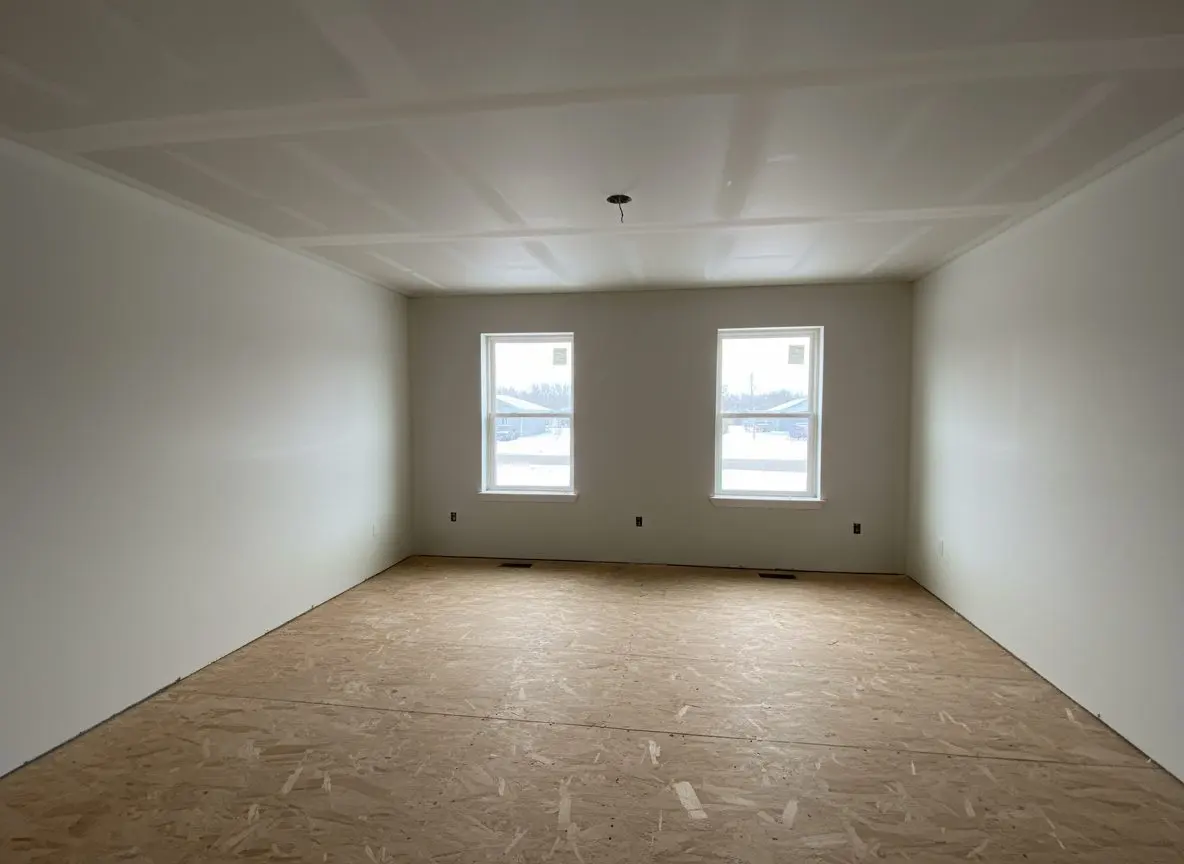
Bellied ceiling replaced in a ranch
Hawthorne
Half-inch board on trusses at twenty-four inches had dropped an inch. Down, joists strapped at sixteen and rehung in five-eighths.
-
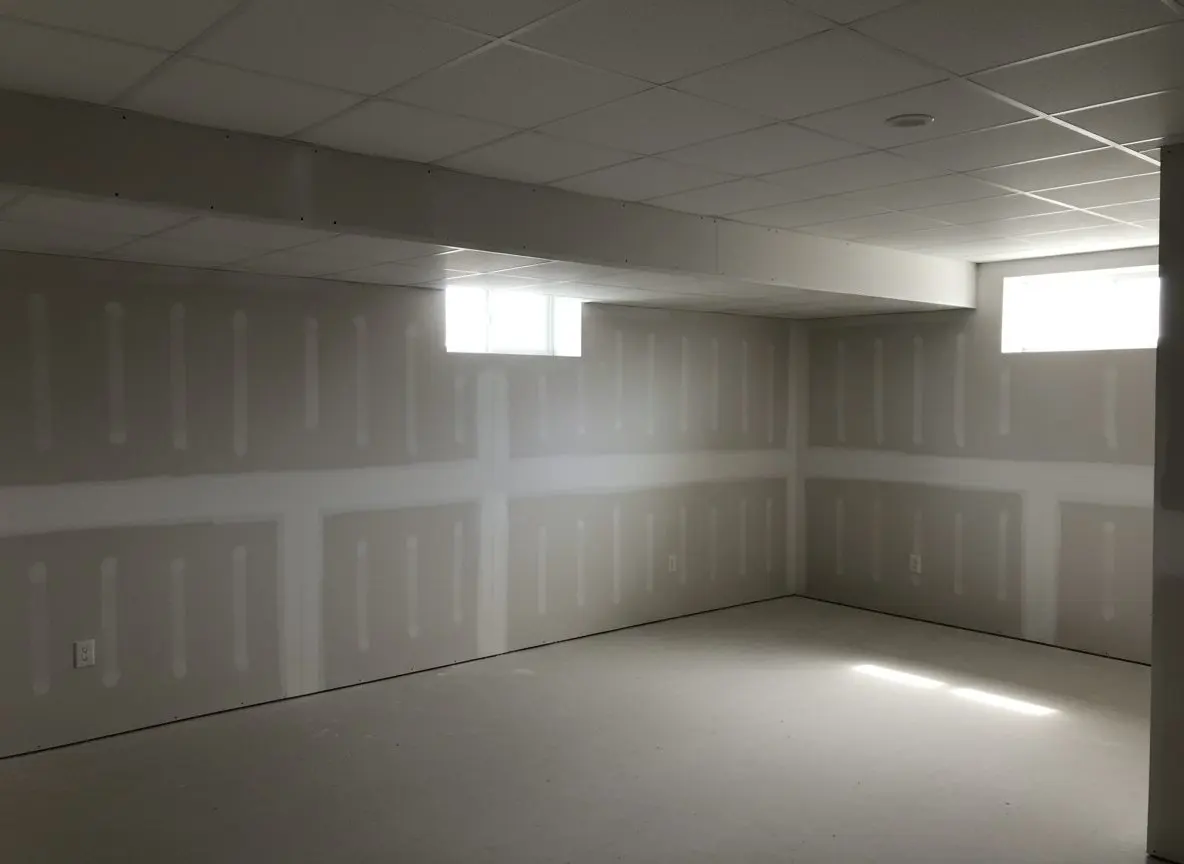
Bulkhead boxed round a duct run
West Fargo
A basement plan that had to keep its head height. Twenty feet of duct boxed in on three faces rather than dropping the whole ceiling by six inches.
-
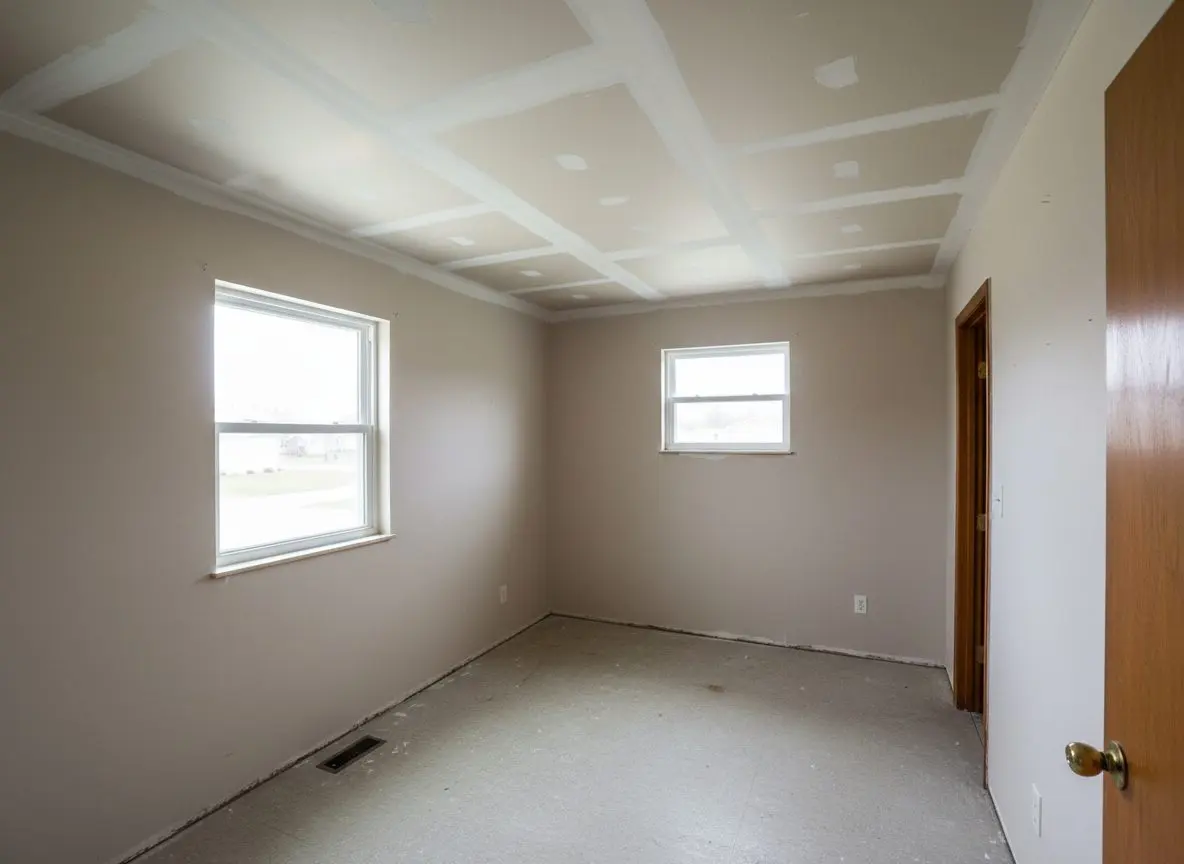
Ceiling opened for a bathroom waste
Moorhead
Three joist bays out under an upstairs bathroom, left open until the plumber signed off, then blocked, hung and taped back into the room.
-
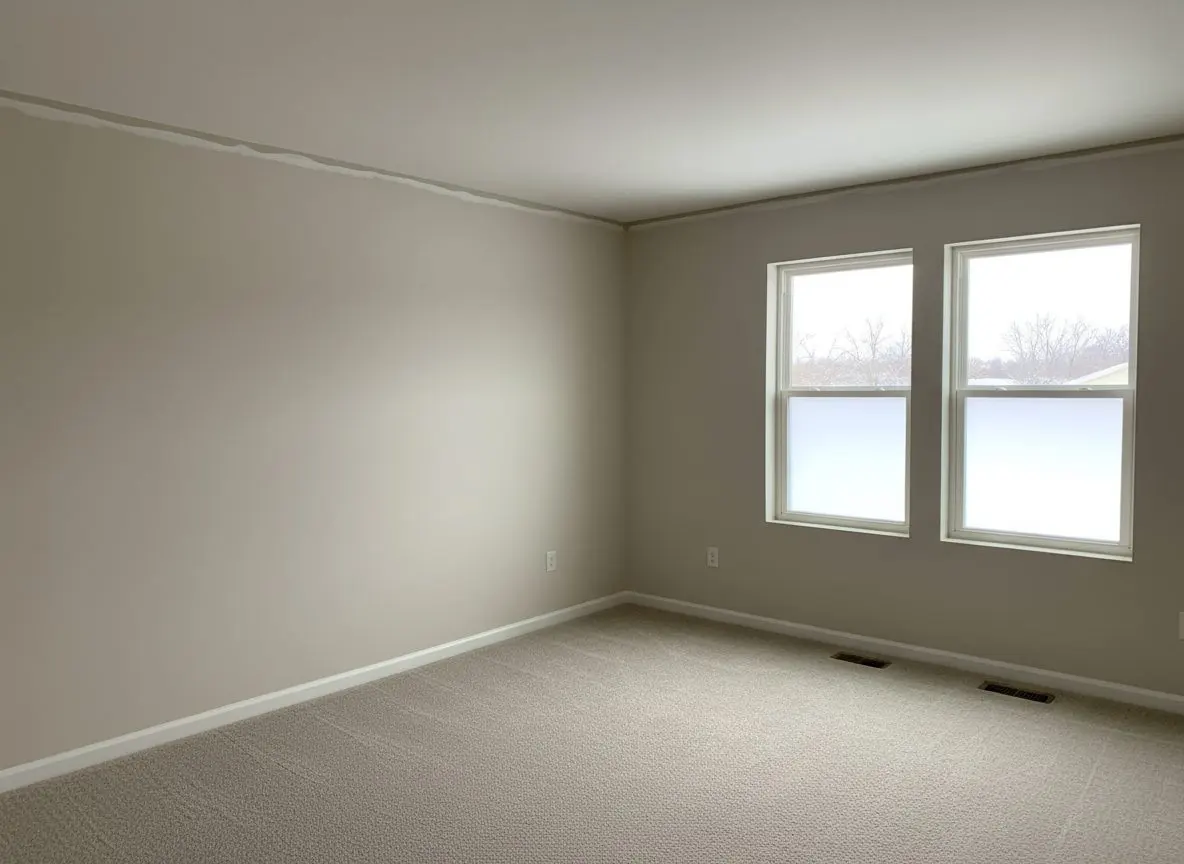
Truss uplift gap closed properly
Horace
A crack reopening every January along one wall. The ceiling edge was released from the top plate and finished to move, rather than filled again.
-
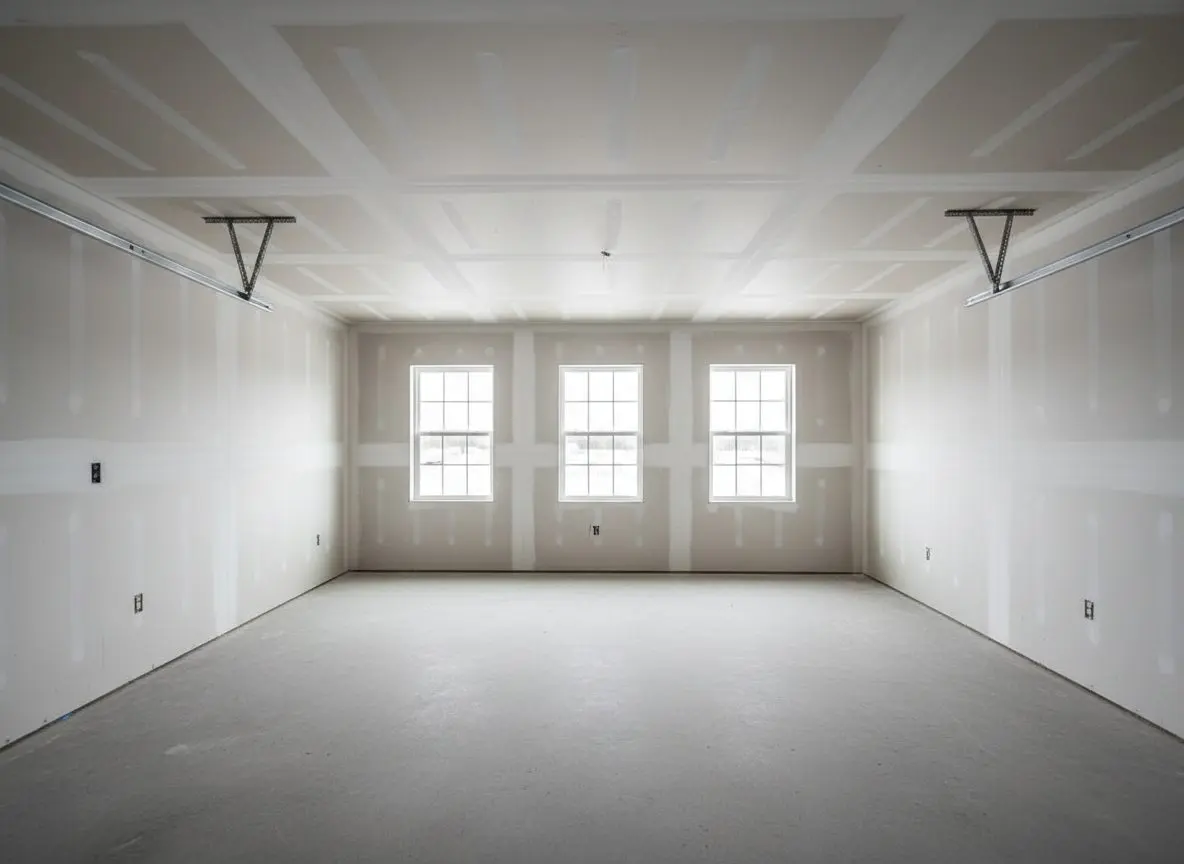
Garage ceiling in Type X
Casselton
Heated for a day beforehand so the coats would set, then hung, firetaped to the rating and left at a plain taped finish.
-
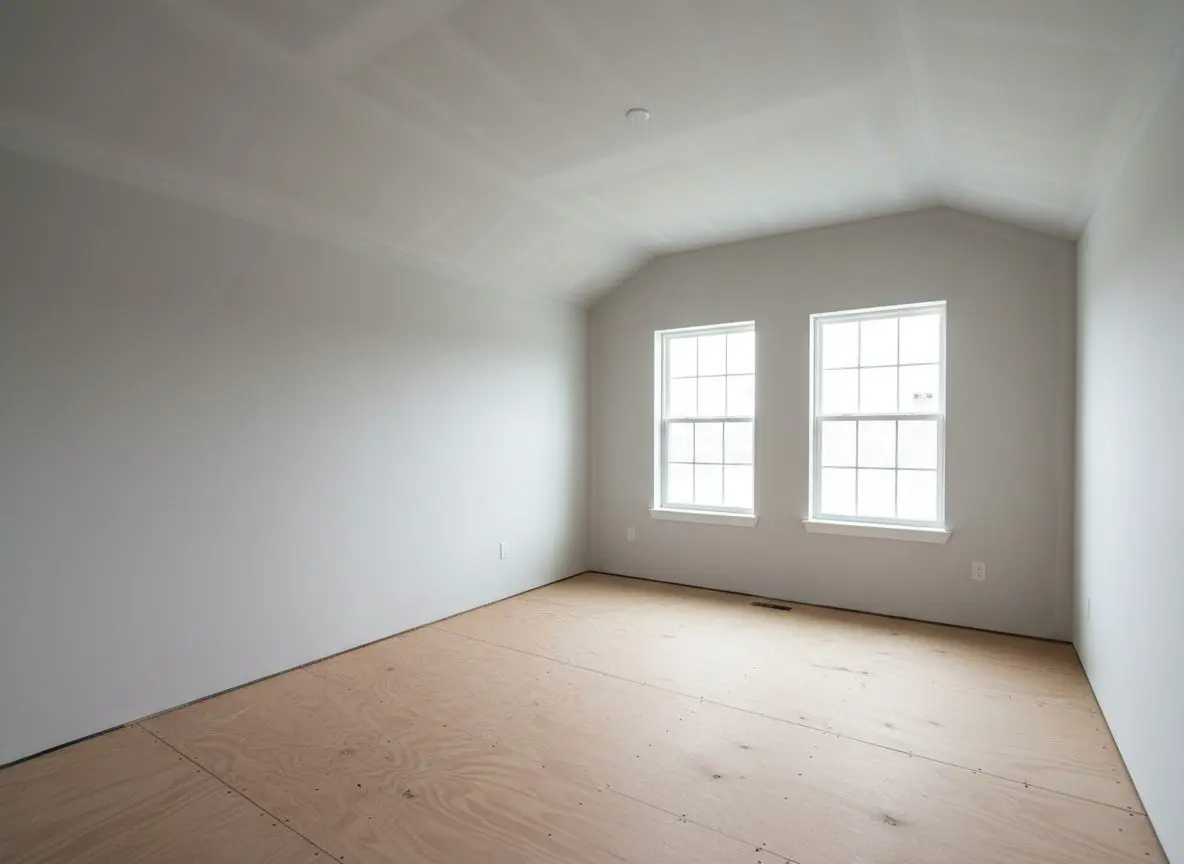
Sound ceiling under a bonus room
Kindred
Resilient channel under the joists and batts laid in the space above, decided while the ceiling was open rather than after the family had moved in.
What people said after looking up at it for a year
-
Rated 5 out of 5
A pipe froze and split behind the laundry wall in January. Wet board out the same week and the wall back the next. No fuss and no guessing.
Travis O. Kindred Water Damage Repair -
Rated 5 out of 5
Basement of a 2019 build, framed and never finished. The crew found a header sitting out half an inch and stopped to shim it rather than board over it, which added a day. Worth the day.
Marit L. Mapleton Drywall Installation -
Rated 5 out of 5
I turn a rental over most Augusts and had used a different crew every time. This one was two rooms of knocks and a hole where a TV bracket pulled out. Two days, primed, and the sheen matches.
Deb S. Barnesville Drywall Repair
All three of these started as a phone call about one wall. Tell us what yours is doing and we will come and look.
Get a free quoteFAQs
Frequently asked questions
Questions people ask before booking ceiling work
How long is a room without a ceiling?
Two to four days for an ordinary room, and the ceiling itself is up on the first of them. The rest is coats and drying time overhead, which is slower than a wall because compound goes on thinner against gravity. A whole main floor runs closer to a week and a half.
Do the light fittings come down and go back up?
We take them down, cap the wires off safely and put the same fittings back once the ceiling is primed. What we will not do is rewire or move a circuit, so if a light is going somewhere new, get your electrician in while the joists are open and it costs a fraction of what it will later.
Does the insulation have to come out of the attic?
Only the part that falls when the old ceiling does, which above a stripped room is most of it. It gets bagged in the room rather than dragged through the house, and it goes back to full depth before the new board is lifted. Settled or wet fiber is replaced rather than reused.
Can you board around the ducting and the pipes?
Yes, and the choice is a bulkhead or a dropped ceiling. Anything sitting below the joists gets boxed in with framing and hung on three faces, which keeps the height in the rest of the room. Where there are several runs at different depths, dropping the whole ceiling is often the cheaper answer.
Can you board over a popcorn ceiling instead of scraping it?
Yes, and quarter-inch board over the top is a genuine option where the texture is sound and the ceiling is flat. It costs you a quarter inch of height and skips the scraping and the mess entirely. Where the plan is to get it off rather than bury it, that is texture and finishing.
Will a new ceiling quieten the room above?
Only if it is built to. Board on its own changes very little, because sound travels through the joists rather than through the sheet. Resilient channel under the joists with batts laid in the space between them is what makes the difference, and both have to go in while the ceiling is open.
Can we use the room in the evenings while it is going on?
Not while the ceiling is off, and usually yes once the board is up. The tear-out day is the one you lose completely. After that the room has staging in it and a sheeted floor, so it is walkable but not liveable, and tools come down and the floor gets vacuumed at the end of each day.
Can a basement ceiling go up over all the pipework?
Yes, and the thing to settle first is what you might need to reach again. Valves, cleanouts and junction boxes get an access panel cut and framed rather than being buried, and anything that has to stay reachable is listed on the scope before board goes up rather than remembered afterwards.
Can I fix a ceiling fan into the new ceiling?
Yes, if blocking goes in before the board does. A fan cannot hang off board or off a standard box, it needs a rated brace or a timber block screwed between the joists. Tell us where it is going while the joists are open and it is ten minutes, rather than a hole cut afterwards.
Is a nine foot ceiling much dearer than an eight?
Yes, and the difference is not the board. Above eight feet everything moves to staging, sheets go up with two people, and finishing overhead at that height is slower on every coat. The walls in the room get more expensive at the same time, because a nine foot wall needs a second course of board.
Can you board a garage ceiling in the middle of winter?
Yes, with heat in the garage. Compound will not set properly below about fifty-five degrees, so a heater runs the day before and stays on until the last coat is dry. In an unheated garage in January the coats simply freeze, and frozen compound never gets its strength back.
Do you need to get up into the attic?
On any ceiling replacement, yes, and it is worth an hour before the quote. What is above the board decides most of the job, so somebody goes up through the hatch to look at the insulation depth, the barrier, the truss chords and whether there is frost or staining on the underside of the deck.
Fargo Drywall Elite
The book runs three to four weeks out, and a leaking ceiling jumps to the front of it.
Fargo Drywall Elite hangs, tapes, finishes and textures board across Fargo and the Red River Valley towns around it, in houses, additions and commercial units alike. Three crews finish around a hundred and eighty jobs a year, working through winters most trades slow down for. Trading here since 2009.
Why a crew that knows a Fargo winter makes the difference
- Seventeen years hanging board through Red River Valley winters, since 2009
- A measure on site before anything is priced, never a number guessed over the phone
- The scope is written down so you can hold it against the other two quotes
- Compound sets fast in dry winter air, and the coats are timed for it
- Every surface is primed before we leave, so your painter is not the one who finds a defect
If a ceiling is staining after the melt, a wall needs drywall from scratch, or a room just needs finishing off, call (701) 555-0132 and somebody will come out and measure it. You get the scope in writing before any board is cut, and the schedule accounts for the drying time a Fargo winter actually needs.
Give us a call
Send us a message
1630 1st Ave N, Ste B, Fargo, ND, 58102
Where to find us