Commercial Drywall Contractors in Fargo and the Valley

Manned to your schedule rather than ours, billed by floor or by phase against lien waivers, and worked at night where a tenant is trading through it.

Fit-outs, multifamily and rated assemblies in Fargo

You end up with a floor handed over on the date it was promised, with the punch list closed before the crew leaves.

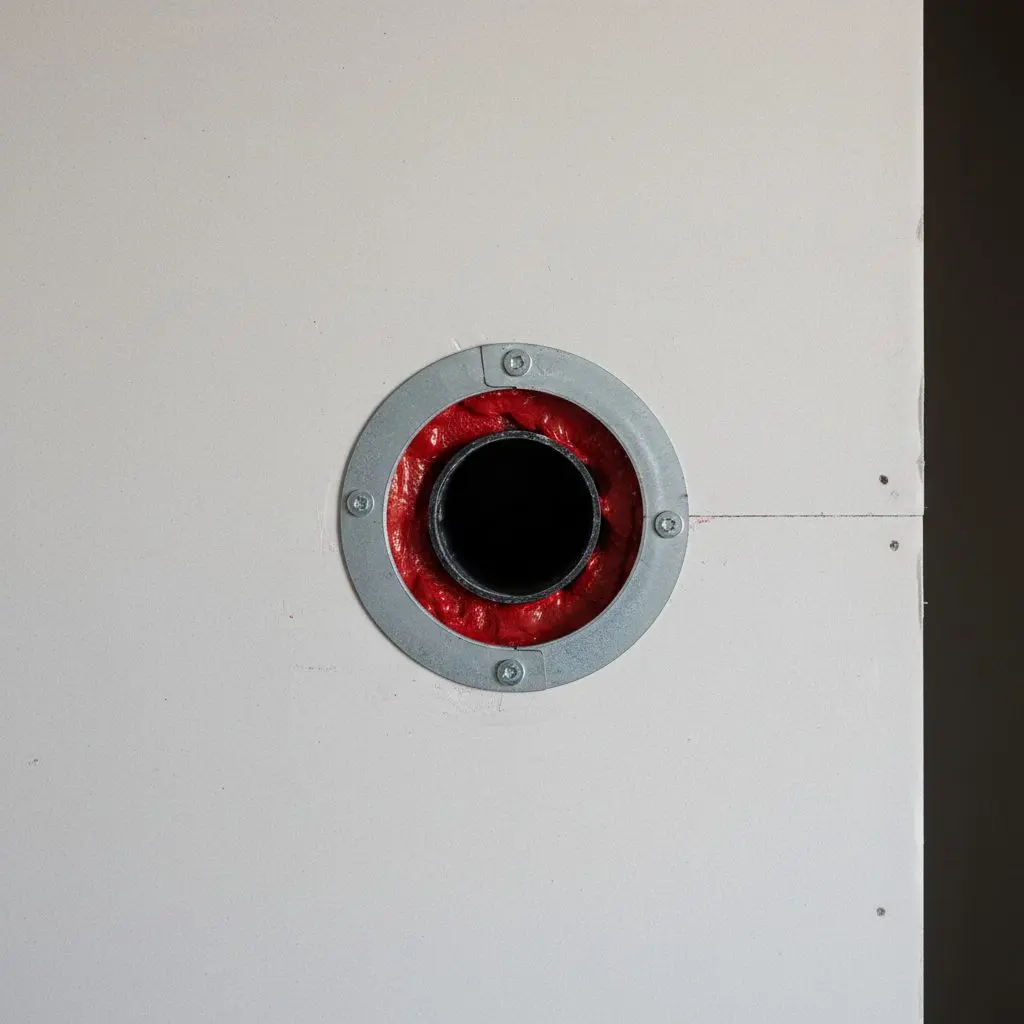
A firestop collar and red sealant around a pipe penetration through a rated wall, close enough that the penetration

Fargo Drywall Elite is a drywall contractor working commercial and multifamily jobs across Fargo and the valley since 2009. Three crews, fully insured in North Dakota, and enough hands to put eight on one floor when a schedule needs it rather than two for twice as long.

Tenant improvement buildouts are the biggest share, then multifamily hanging, then offices and clinics, then retail and restaurant work. Rated assemblies are built to the tested design number they were specified under, with the right board, the right fastener spacing and firestopping at every penetration, rather than to a general idea of what a one hour wall looks like. That is the difference between an assembly your inspector passes and one your inspector asks you to open up.

How small a commercial job is worth booking? A single office ceiling after a sprinkler head let go is a day, and a thirty-unit building hung floor by floor is a season. Both are quoted off one measure and both start at new board.

Send the drawings or call at (701) 555-0132 and you will get a manning plan with the number, not just a price. You will go from chasing a sub for a start date every Friday to knowing which floor is being hung next week!

Insurance, submittals and draws before a sheet moves

What changes on a commercial job is everything around the board, and almost nothing about the board itself.

A homeowner wants to know how much dust there will be and when they get their room back. You want to know how many hands are on site on Tuesday, whether the rated assemblies have been submitted, and whether the invoice will match the schedule of values.

So the paperwork runs first. Certificates of insurance and the additional insured endorsement are with your office before anybody mobilizes, submittals go in before board is ordered, and billing follows the draw schedule with a conditional waiver against each one.

On site it is one foreman who stays for the whole job, so your super has a name and a number rather than whoever is nearest the door.

  • Certificate of insurance and additional insured before mobilizing
  • Progress billing by floor or phase, with lien waivers each draw
  • Submittals for rated and sound assemblies before board is ordered
  • Nights and weekends where a tenant is trading through it
  • One foreman for the whole job, and one number that answers
  • Punch list walked with your super before the crew demobilizes
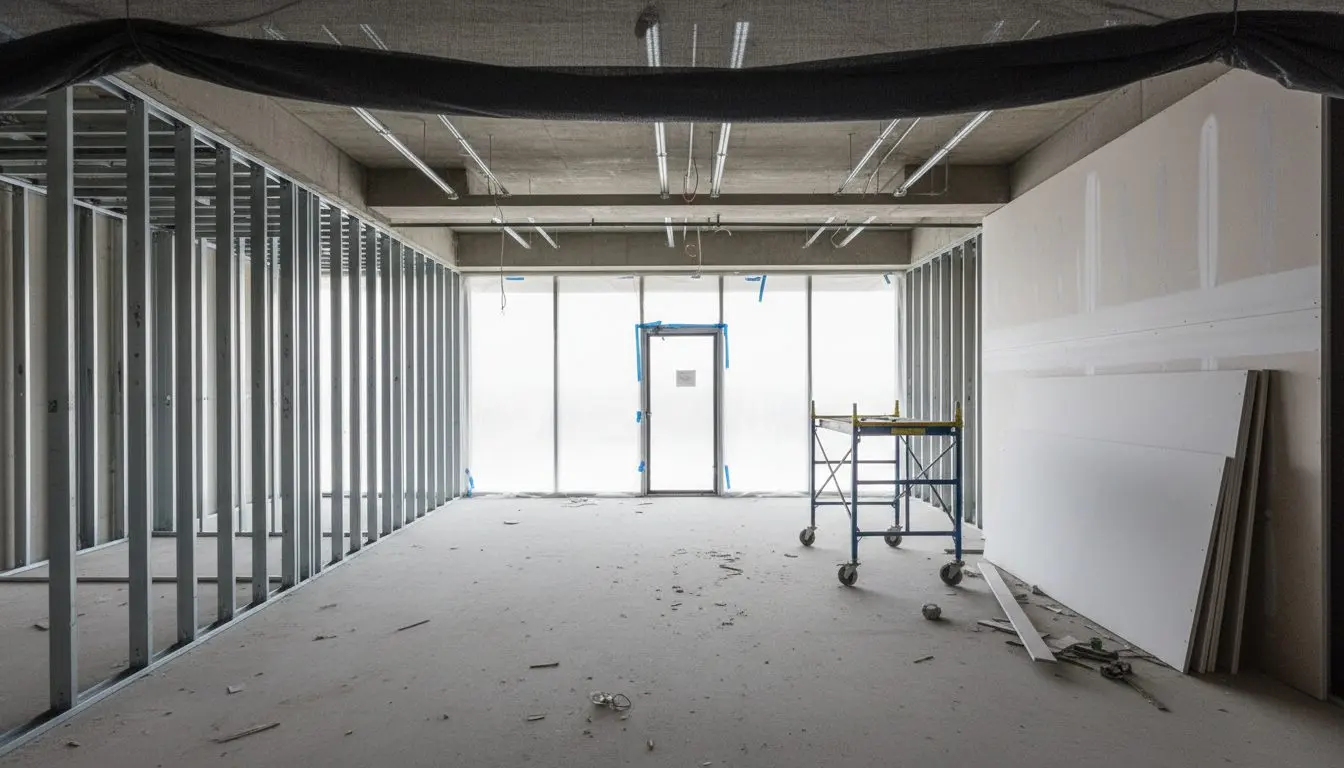
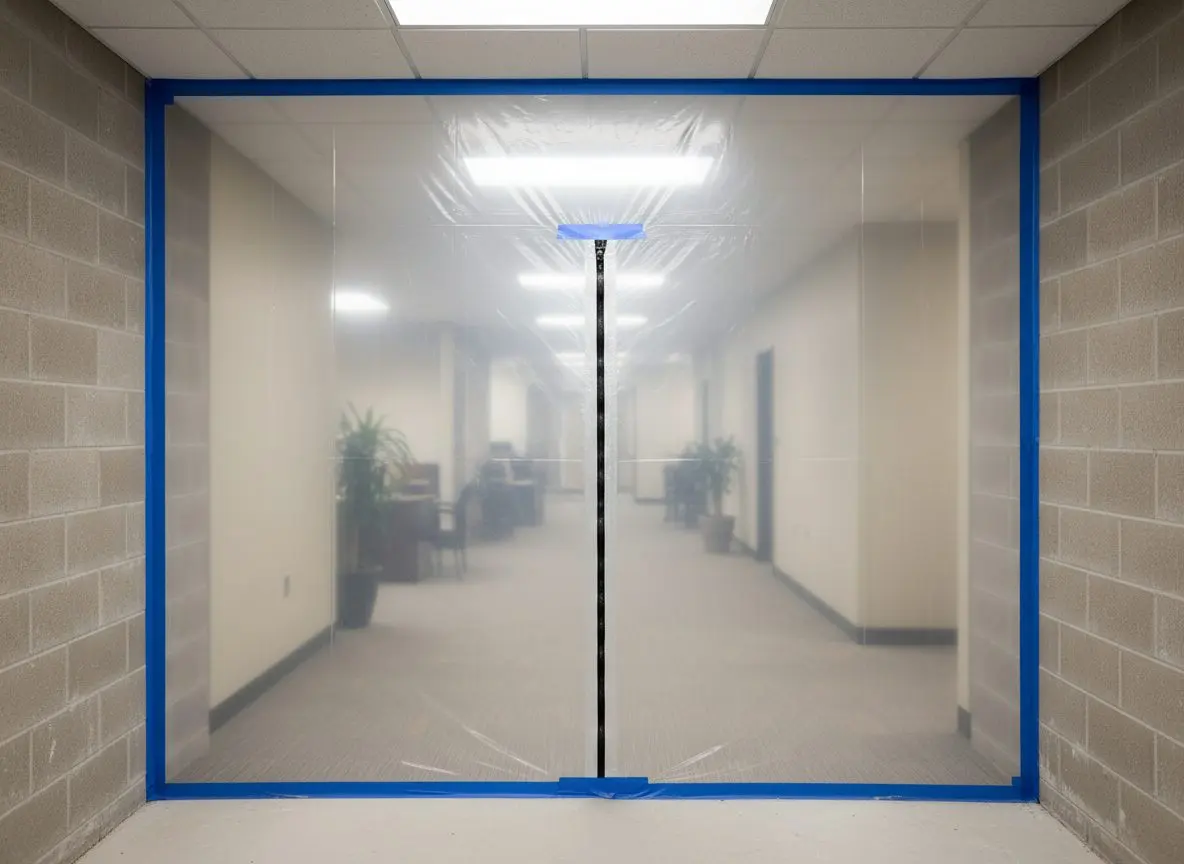
A dust wall of poly with a taped zip door across a corridor in an occupied building, signage on it, with the finished side of the corridor lit and in use
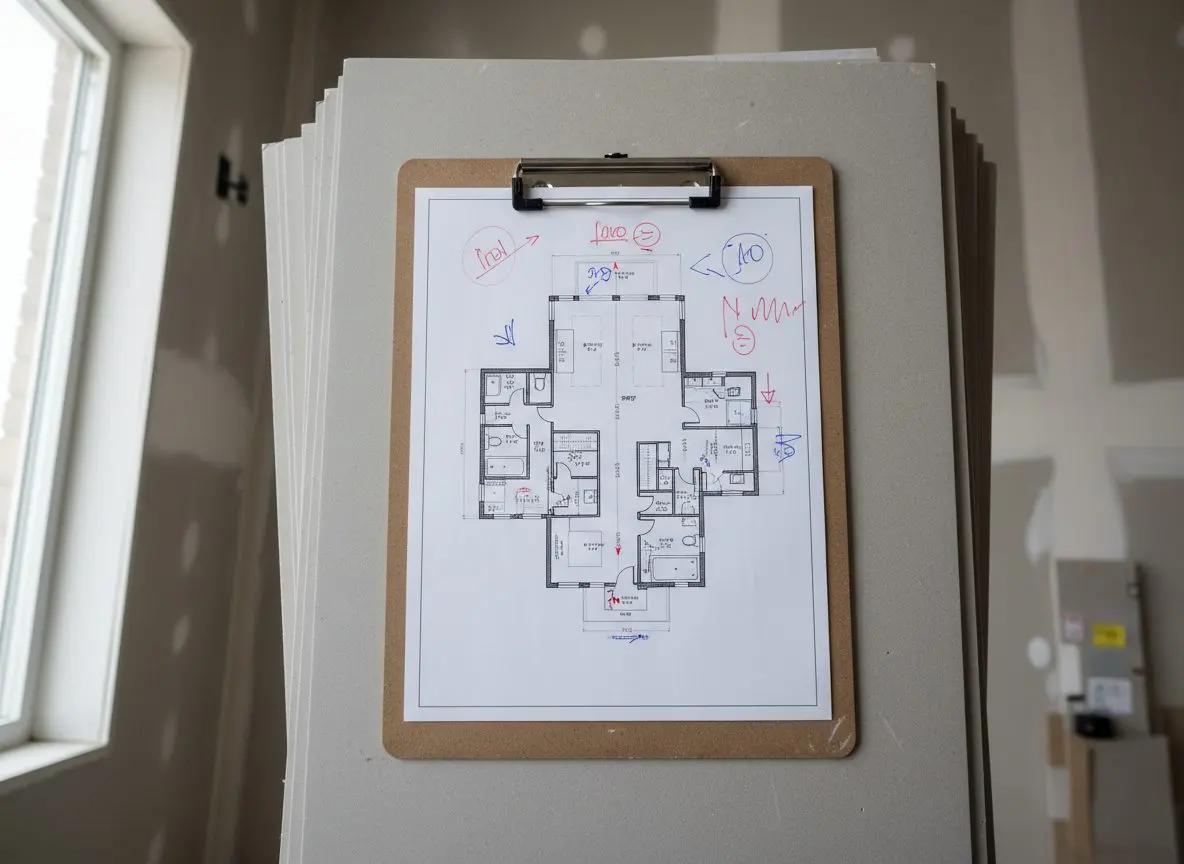
A foreman's clipboard resting on a stack of board with a floor plan on it marked up in pen

Services

The scopes we carry across a fit-out or a unit turn

Commercial Residential
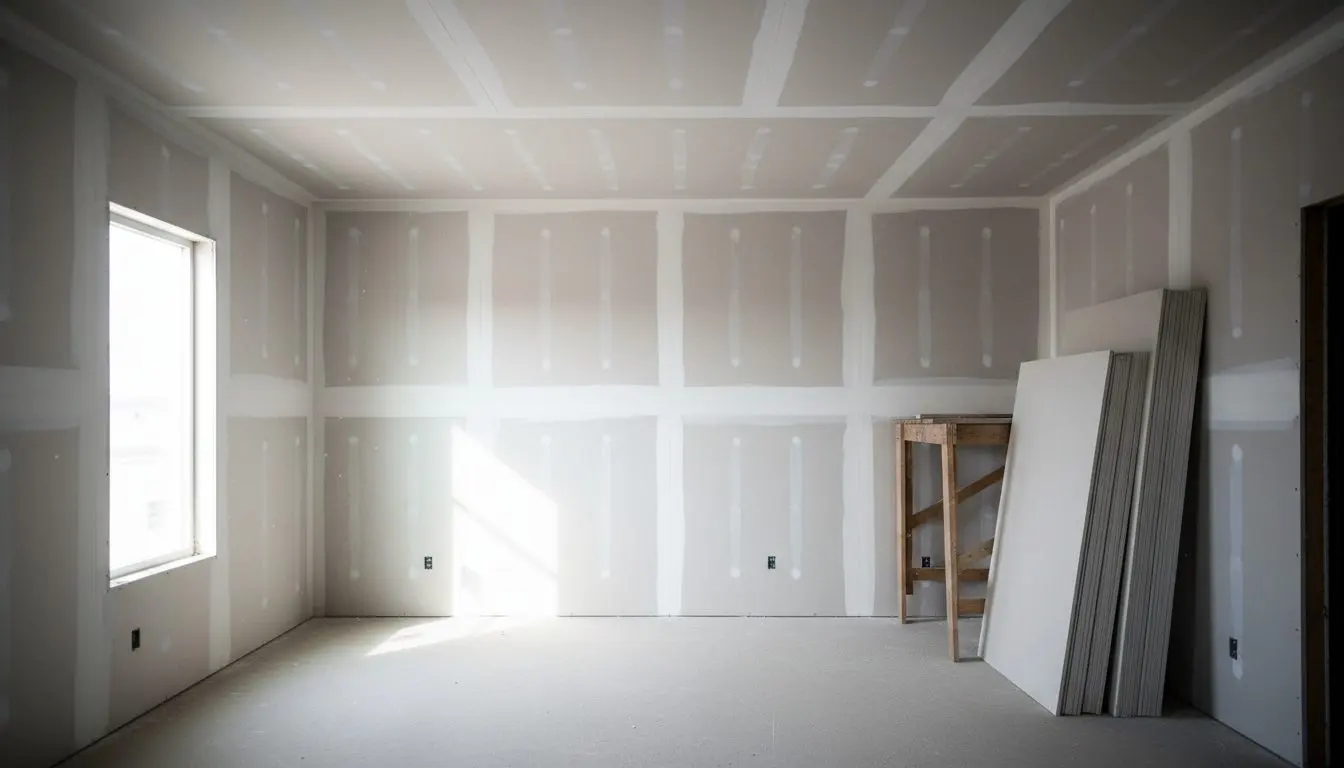
  • A newly hung open room with the sun coming in low across it, sheets up on walls and ceiling

    Drywall Installation

    For anybody who has framing up and needs it turned into a room. Homeowners finishing a basement, contractors adding on, and builders handing over spec houses. What makes people pick it is that one crew hangs, tapes, sands and primes, so there is nobody to blame when a joint shows and nothing waiting on another trade's calendar between the sheets going up and the painter arriving.

    Learn more about Drywall Installation
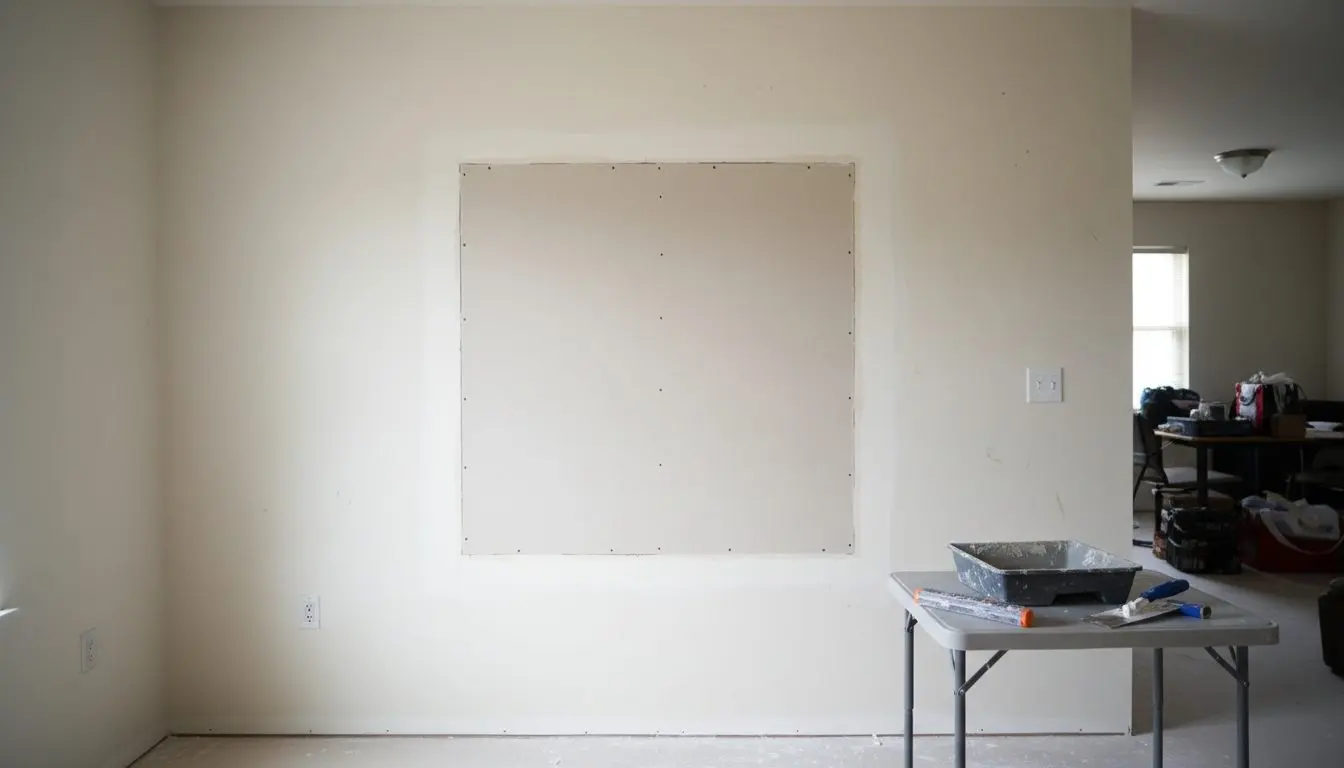
  • A wall in a lived-in room with a neat square patch cut into it and a new piece of board already screwed into place

    Drywall Repair

    For anybody looking at one wall and wondering whether it is worth a call. Homeowners with a list from an agent, landlords between tenants, and people patching after a plumber. What makes them pick it is that the repair is taped rather than filled and the texture is matched off a sample board first, so the patch does not reappear as a pale flat rectangle the first sunny afternoon.

    Learn more about Drywall Repair
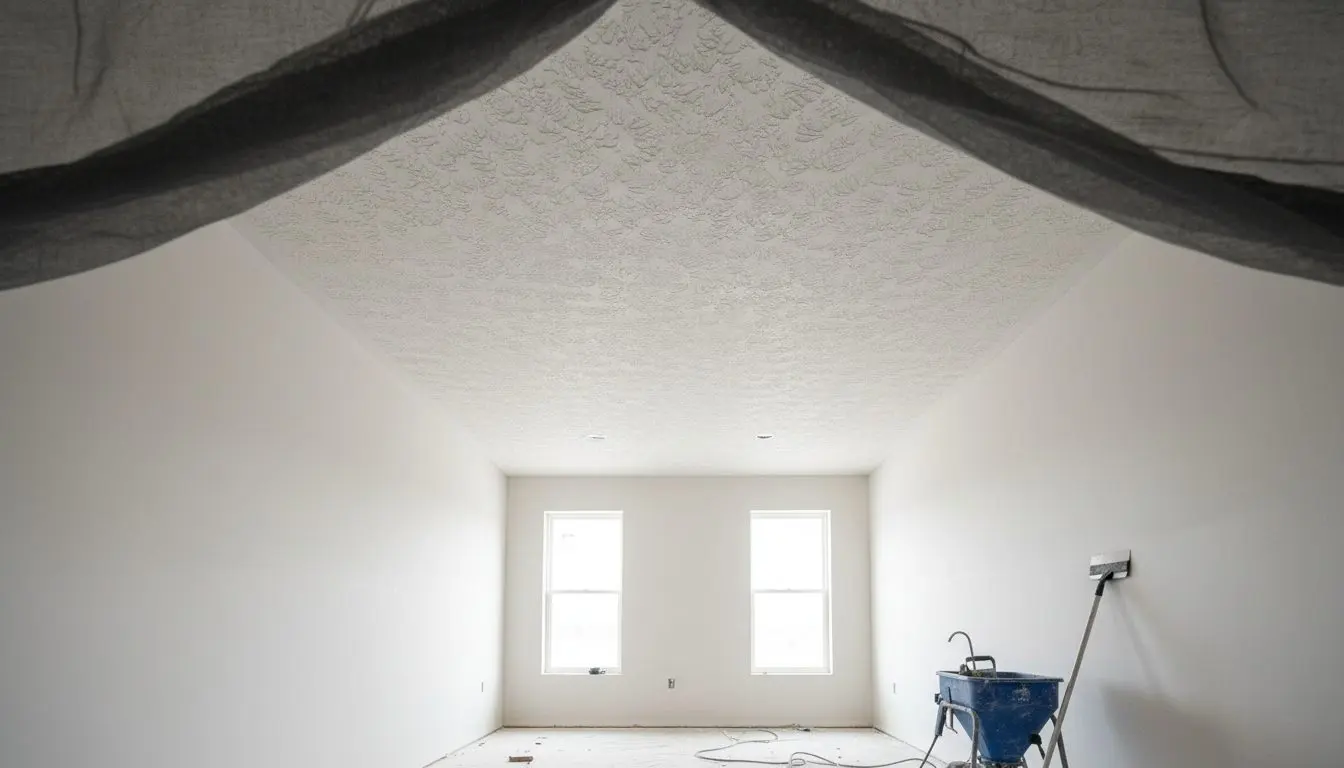
  • A bright room with a freshly sprayed knockdown ceiling and one wall already knifed flat

    Texture and Finishing

    For anybody whose new work has to disappear into old work. Homeowners after a repair, builders specifying Level 5 before a painter, and people taking a popcorn ceiling off after forty years. What makes them pick it is the sample board. The pattern gets proved against your own wall in your own light before a gun is loaded, rather than being matched by eye and argued about afterwards.

    Learn more about Texture and Finishing
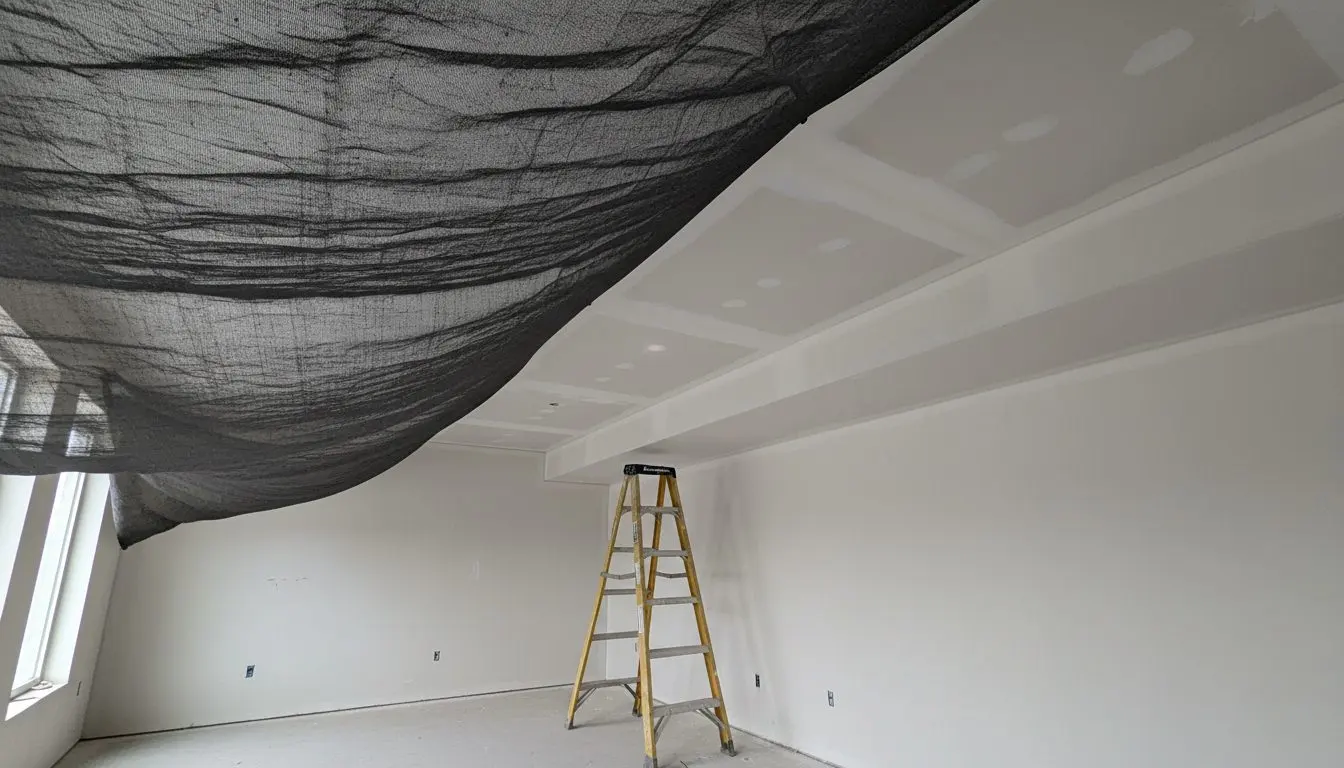
  • Daylight from a window makes the ceiling read as one plane with no line where the sheets meet

    Ceilings

    For anybody whose problem is above their head rather than in front of them. Homeowners watching a ceiling drop between the joists, builders wanting ceilings hung ahead of the walls, and people boxing in ducting after a basement plan changed. What makes them pick it is that the joists are strapped into a plane first, which is what decides whether a ceiling reads flat under a light.

    Learn more about Ceilings
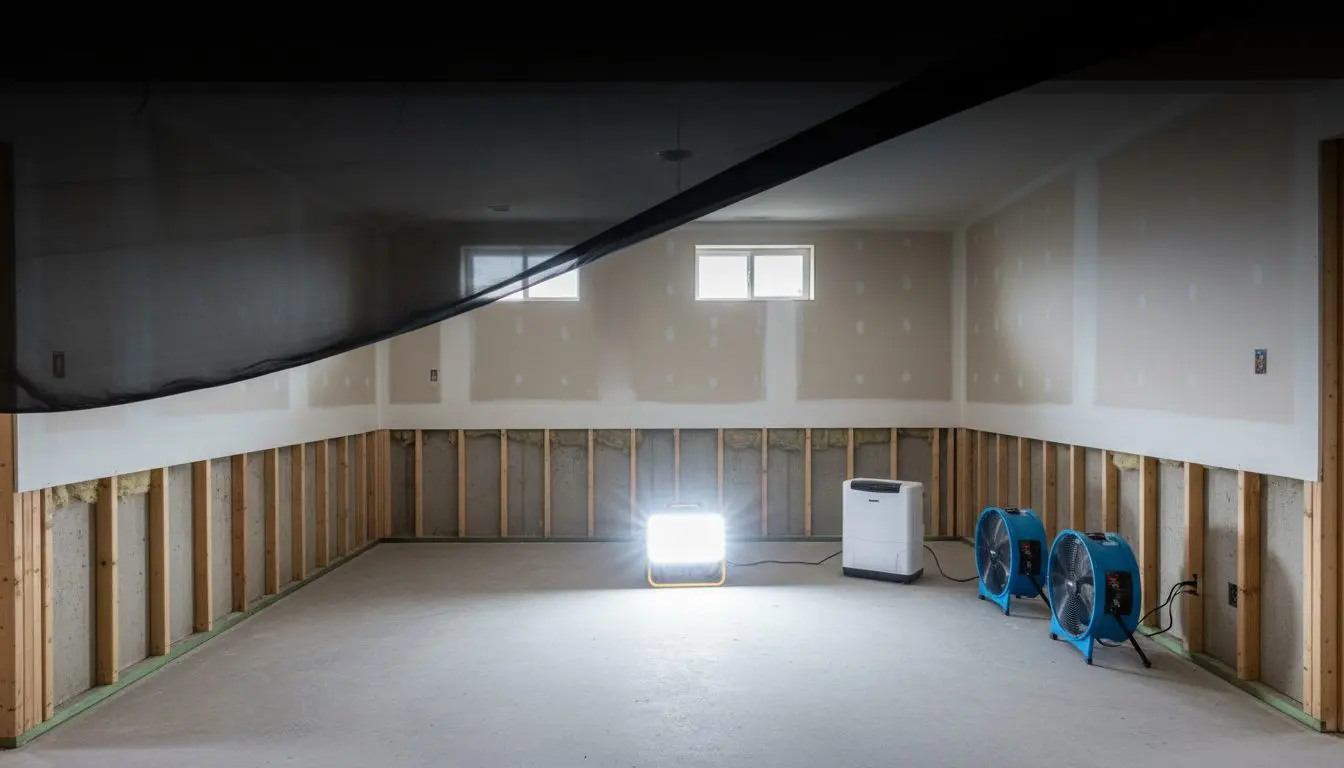
  • A basement room with the lower two feet of board already cut off in a straight line around the perimeter, the framing behind it open and clean

    Water Damage Repair

    For anybody looking at a wall that got wet and wondering how much of it has to go. Homeowners after a spring crest, landlords after a burst line, and people whose ceiling has come up in a brown ring. What makes them pick it is the meter. The framing has to read dry and the reading is written down and dated before a single sheet of board goes back on the wall.

    Learn more about Water Damage Repair

From the first phone call to a swept floor

Three to seven days on site for most houses, and the dust is over inside the first two.

  1. Tell us what the room is

    Same day

    You describe the room, the damage or the plan, and you get told on the phone whether it is a half day, a week, or a job that needs a plumber or a roofer in front of it. Nothing is measured yet.

  2. A measure on site

    Within the week

    Somebody comes out, measures every wall and ceiling, opens up enough to see what is behind the existing surface, and asks where the furniture and the family are going to live while the work runs.

  3. A scope you can compare

    Two working days

    Board thickness, finish level, number of coats, texture and the start date all go in writing. You can hold it against the other two quotes line for line, which is the point of writing it that way.

  4. Protection, then board

    One to three days

    Floors, doorways and vents get sealed before a sheet comes off the truck. Board goes up, screwed to framing at the spacing the sheet calls for, and the room stops being a room for a few days.

  5. Tape, coat and sand

    Two to four days

    Three coats over the joints with real drying time between them, then sanding. This is the slow half of the job and it is the half that decides how the wall reads in low winter light.

  6. Prime, vacuum, hand back

    One day

    The surface is primed so your painter is not the one who finds a defect, dust is vacuumed rather than swept into the air, scrap leave on the truck, and the floor goes back to being a floor.

Call and you will get a straight answer about how many days the room is out of use, before anybody quotes on it.

Get a free quote

What actually moves the price on a drywall job?

Two rooms the same size can quote a long way apart, and it is almost never the board that does it. Access, finish level and what the last crew left behind move the number further than floor area does.

How much wall there actually is
Square footage of surface, not floor area. A room with a stairwell, three closets and a vaulted end has far more board, far more corner bead and about twice the cut time of a plain box the same size.
Level of finish
A Level 4 wall takes three coats over the joints. A Level 5 wall takes a skim over the whole face and another sanding pass, so the labor roughly doubles on that wall even though the board is identical.
Ceiling height and access
Anything above eight feet means staging rather than a bench, and two people carrying every sheet instead of one. A vaulted great room can add more days than the extra square footage on its own suggests.
Whatever sits behind the board
Framing that is out of plane, old strapping, knob and tube, or an inch of blown insulation in the ceiling cavity all have to be dealt with before board goes on, and none of it is visible from the doorway.
Whether anybody is living there
An empty house lets a crew run straight through. An occupied one means poly walls, a clean path to the door, tools packed away nightly and work stopped around the parts of the day the house is being used.
Blending into the existing finish
A patch in a plain flat wall is quick. Matching an existing orange peel or a hand knockdown means sample boards, drying time between attempts and a texture pass that gets checked under a work light first.

Which of these apply to your job is settled on the visit rather than on the phone, and the written scope says which ones did. Get a free quote

FAQs

Frequently asked questions

What contractors and property managers ask before awarding

Can you name us as additional insured?

Yes, and the certificate goes to your office before anybody sets foot on site. General liability and workers compensation are both in place and the endorsement naming your entity is issued by our carrier rather than typed onto the certificate by us. Send the wording you need with the award.

How do you bill a job that runs three months?

Progress billing against a schedule of values, by floor or by phase, whichever matches how you are drawing. Each application carries a conditional lien waiver, and the final one an unconditional waiver on payment. Retainage is whatever the contract says rather than something argued about at the end.

Can you work nights while the store is still trading?

Yes, and on tenant improvement work in an occupied building it is usually the only sensible answer. Crews come in after close, the dust wall goes up and comes down each shift, and the space is handed back swept and lit for opening. It costs more per hour and it saves the tenant's trading days.

Do you provide submittals for the rated assemblies?

Yes, before board is ordered rather than after it is hung. The submittal names the tested design number, the board, the fastener type and spacing, the framing and the firestop products at penetrations. If the specified assembly cannot be built as drawn, you hear it at submittal rather than at inspection.

How many hands can you put on one site?

Eight on a single floor when a schedule needs it, drawn from three crews. What we will not do is promise a crew size we then have to take off your job to cover another. The manning plan goes on the proposal with the number, and if it changes you are told the week before rather than on the day.

Can you hold a date against our framing inspection?

Yes, and the schedule is written against your milestones rather than our diary. What moves the date is your inspection slipping, not ours. Give us a week of notice either way and the crew moves with it. Notice on the day means the crew is already on another site and the slot goes to the end of that week.

What happens to the punch list?

It gets walked with your super before the crew demobilizes, not after. Anything found on that walk is closed by the same crew while the staging and the compound are still on site, which is the whole reason for doing it then. Items raised after demobilization are a return visit and get scheduled as one.

Do you firestop the penetrations or is that somebody else?

We firestop what we open in a rated assembly and we detail it to the tested system. Penetrations made by other trades after we have closed the wall are theirs, and that split needs saying out loud at the preconstruction meeting, because it is the single most common thing an inspector finds open.

Can you work in an occupied clinic without closing it?

Yes, with negative air and hard containment rather than a sheet of poly and good intentions. Anything in a healthcare space is worked behind a sealed barrier with the pressure running the right way, and the floor is cleaned at the end of each shift. Send your infection control requirements with the drawings.

Do you travel outside Fargo for commercial work?

About forty miles out from the shop as standard, which covers both sides of the river and the towns along Interstate 94 and Highway 10. Further than that depends on the length of the job. A week is not worth a crew driving ninety minutes twice a day. Three months with lodging usually is.

Who signs off a change order?

Nobody on our side starts extra work without your written authorization, and that is a rule rather than a preference. Additional scope is priced, sent, signed and then done. A verbal from somebody on site gets confirmed in writing the same day, because the alternative is an argument at the final application.

Can you start in January on an unheated shell?

Not until there is temporary heat holding the space above fifty-five degrees. Compound will not set below that and board off a cold trailer sweats when it warms up, so both are false economies. Get the temporary heat in the schedule ahead of us and a January start is straightforward here.

Fargo Drywall Elite

The book runs three to four weeks out, and a leaking ceiling jumps to the front of it.

Fargo Drywall Elite hangs, tapes, finishes and textures board across Fargo and the Red River Valley towns around it, in houses, additions and commercial units alike. Three crews finish around a hundred and eighty jobs a year, working through winters most trades slow down for. Trading here since 2009.

Why a crew that knows a Fargo winter makes the difference

  • Seventeen years hanging board through Red River Valley winters, since 2009
  • A measure on site before anything is priced, never a number guessed over the phone
  • The scope is written down so you can hold it against the other two quotes
  • Compound sets fast in dry winter air, and the coats are timed for it
  • Every surface is primed before we leave, so your painter is not the one who finds a defect

If a ceiling is staining after the melt, a wall needs drywall from scratch, or a room just needs finishing off, call (701) 555-0132 and somebody will come out and measure it. You get the scope in writing before any board is cut, and the schedule accounts for the drying time a Fargo winter actually needs.

(701) 555-0132

Give us a call

office@fargodrywallelite.com

Send us a message

1630 1st Ave N, Ste B, Fargo, ND, 58102

Where to find us

Book a measure

(701) 555-0132 Get a free quote